Translating Technical Capability into Business Decisions

Big Problem
Manufacturing leaders rarely questioned whether our robot could sand, polish or trim composite parts. They questioned whether automation would solve their workforce, operational, and financial challenges. Technical demonstrations answered engineering questions. Capital investment decisions required operational confidence from high-level decision-makers.
Symptoms
How do I justify this investment to leadership?
How do we keep the quality of our products while keeping up with growth demands?
The Context
Commercial conversations focused on specifications, programming capability, and technical performance. Customers evaluated automation through the lens of labor constraints, production consistency, throughput, operational flexibility, ROI and implementation risk. The commercial system needed to translate engineering excellence into business confidence.
My Role
Designed the commercial decision architecture that connected robotics engineering to operational and financial decision-making.
I translated technical capability into repeatable business evidence that enabled manufacturing leaders to evaluate automation through workforce, production, operational, and economic outcomes rather than robot specifications alone.
Enabled through: ICP refinement, beachhead market selection, workflow analyses, customer evidence, ROI framing, buying-driver architecture, sales enablement, AI-assisted prospect evaluation, budget campaign strategy
The Transformation
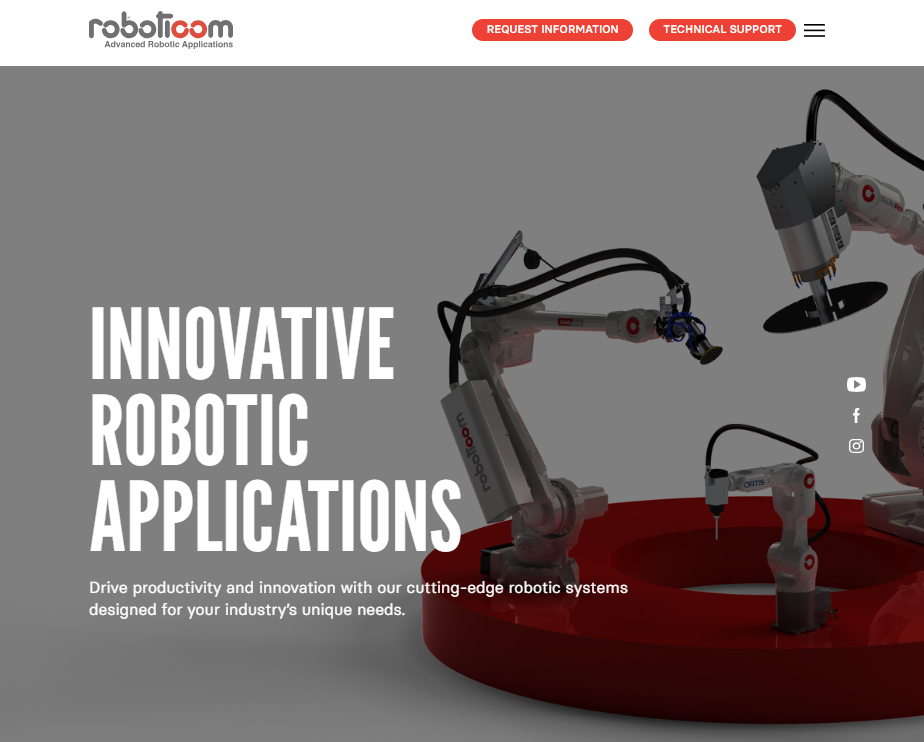
Took positioning and all of its manifestations from YouTube video descriptions to CTAs to brochure copy and social media from “here’s what the robot can do” to “here’s how manufacturers scale production despite labor and quality constraints”. Automation became a business decision, not a robotics decision.
Impacts on Commercial Health Indicators
↑Operational Translation
↑Evidence Architecture
↑ICP Discipline
↑Institutional Clarity
Learn more about what I mean by these terms: See the Commercialization Executive Brief here.
Results
Saw website traffic decline, but the quality of form fills go up, as evidenced by 1.5x more form fills moving to demo compared to before repositioning.
Enterprise Impact
Created a repeatable commercial evaluation process that better aligned customer buying criteria and motivations with organizational strengths, sharper differentiation within target markets, and improved the organization’s ability to compete for strategic automation investments.
Takeaway
Customers buy confidence that technical capability will improve their business.
Why This Works
Engineers optimize products and executives optimize businesses. Successful commercial systems translate engineering excellence into executive-level evidence.

Comments